
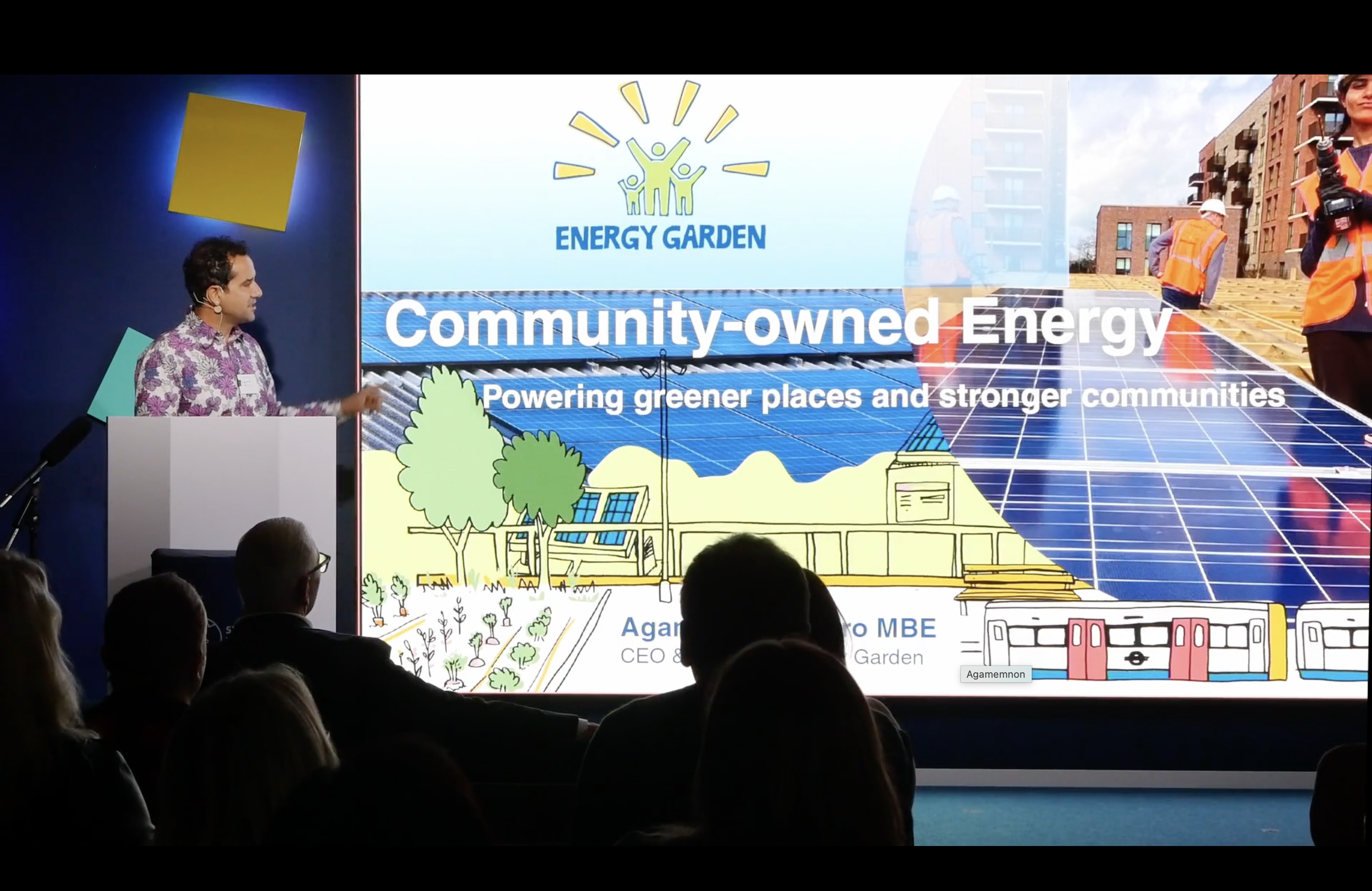
From London to Stockholm and beyond, Energy Garden is joining a growing international conversation about climate resilience, community ownership and the right to nature.
Cities around the world are investing billions in renewable energy, climate adaptation and new infrastructure. Yet one question is too often missing from these conversations:
Who owns the infrastructure, who benefits from it, and where does the wealth it creates go?
For more than a decade, Energy Garden has been exploring how productive infrastructure can do more than generate clean energy. It can also create the financial foundations for stronger communities, healthier environments and lasting social change.
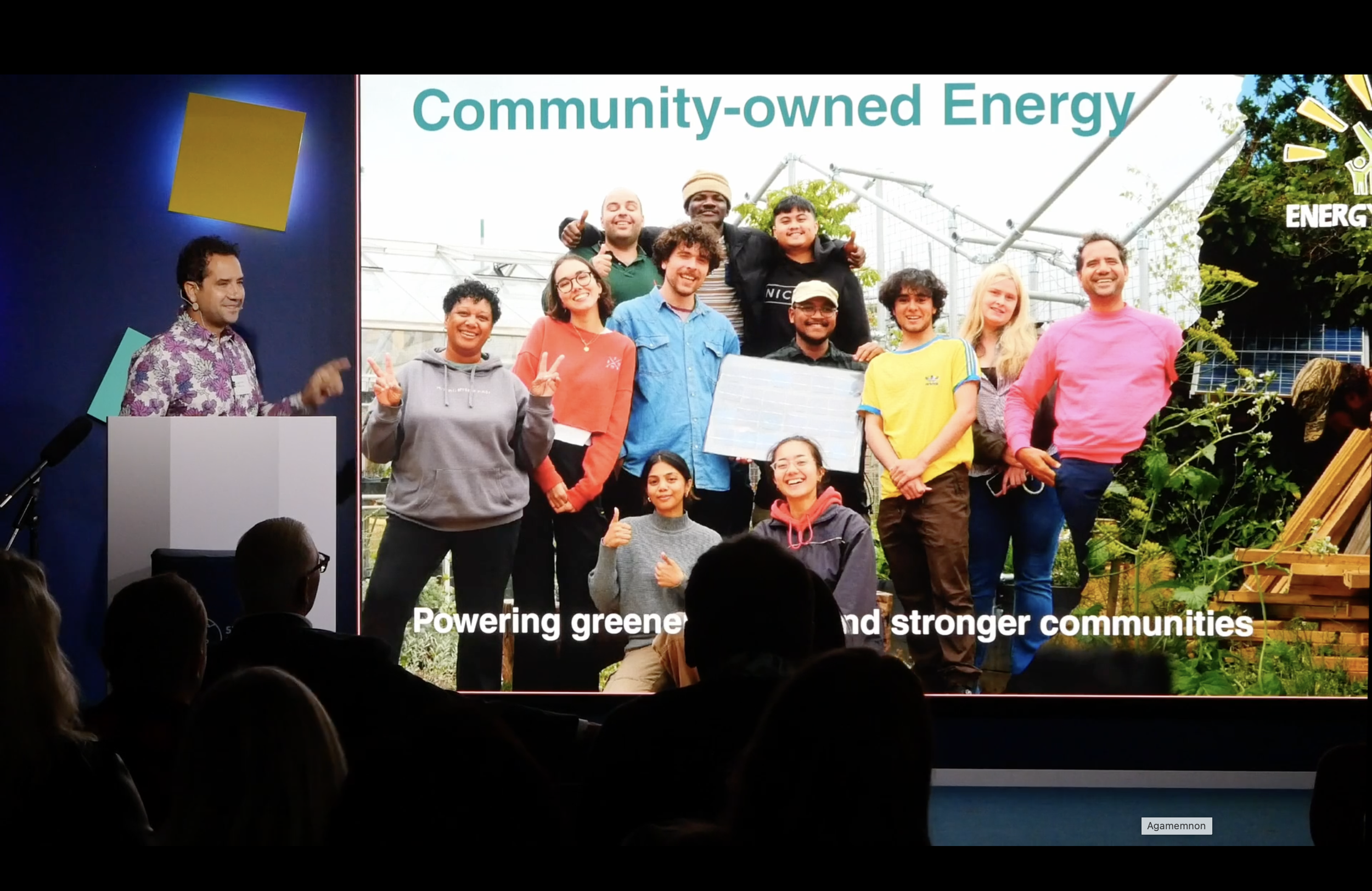
This October, our Founder and CEO, Agamemnon Otero MBE, was invited to Stockholm by Jörgen Lööf of ElectriCITY Innovation to share this approach at Innovation Day 2026, organised with Stockholm Business Region.
But the invitation was part of a much wider conversation, one that began long before the pandemic and is now gathering renewed momentum.
The challenges facing our cities do not arrive separately
Climate change, biodiversity loss, inequality, unemployment, fuel poverty and social isolation are often addressed through separate programmes, budgets and institutions. Yet communities experience them together.
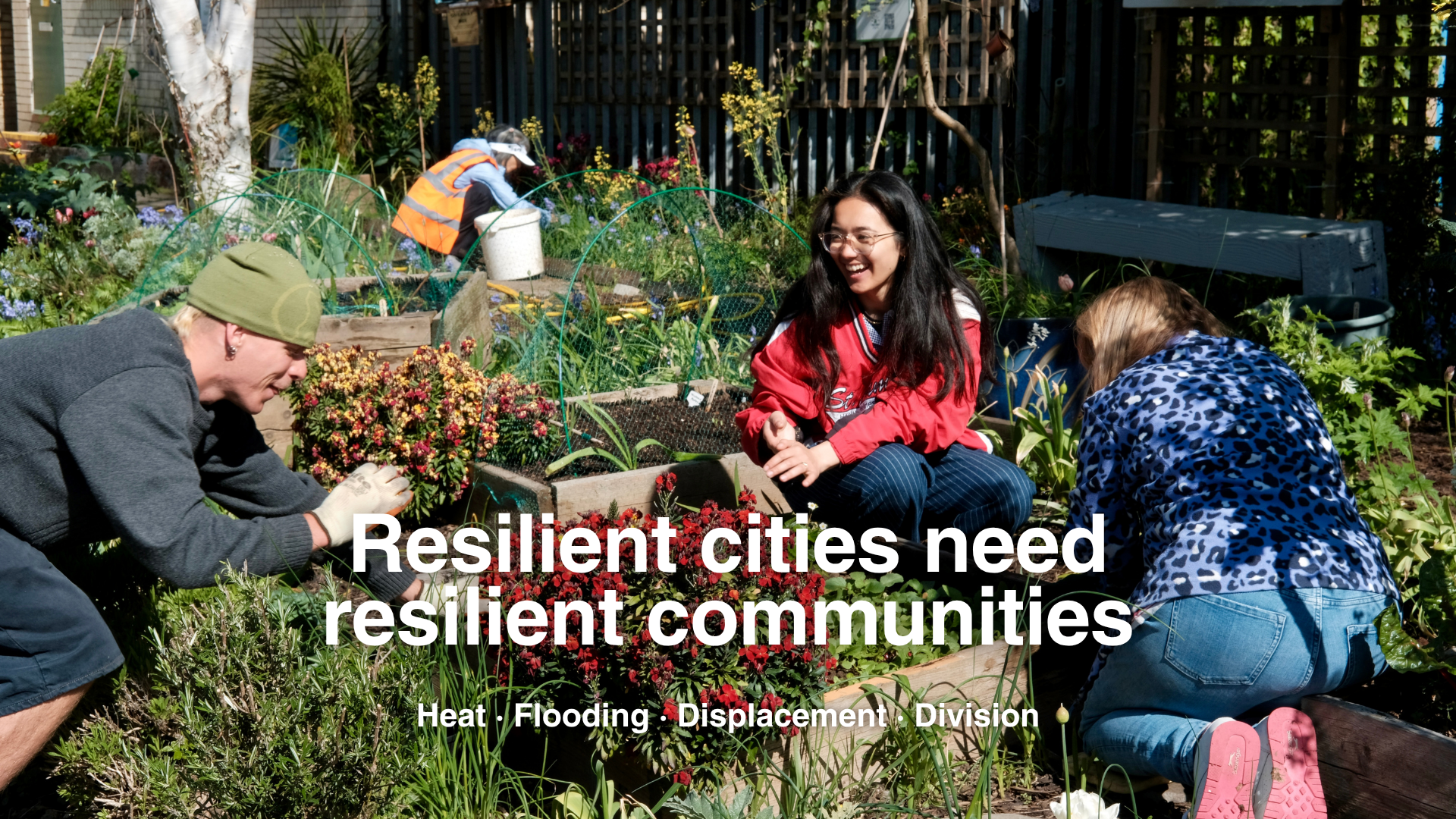
A neighbourhood struggling with poor housing may also lack accessible green space, employment opportunities and affordable energy. Extreme heat and flooding can intensify these inequalities, while environmental degradation can weaken people's connection to the places they call home.
Energy Garden emerged from a simple question:
Could we create infrastructure that helps address several of these challenges at once?
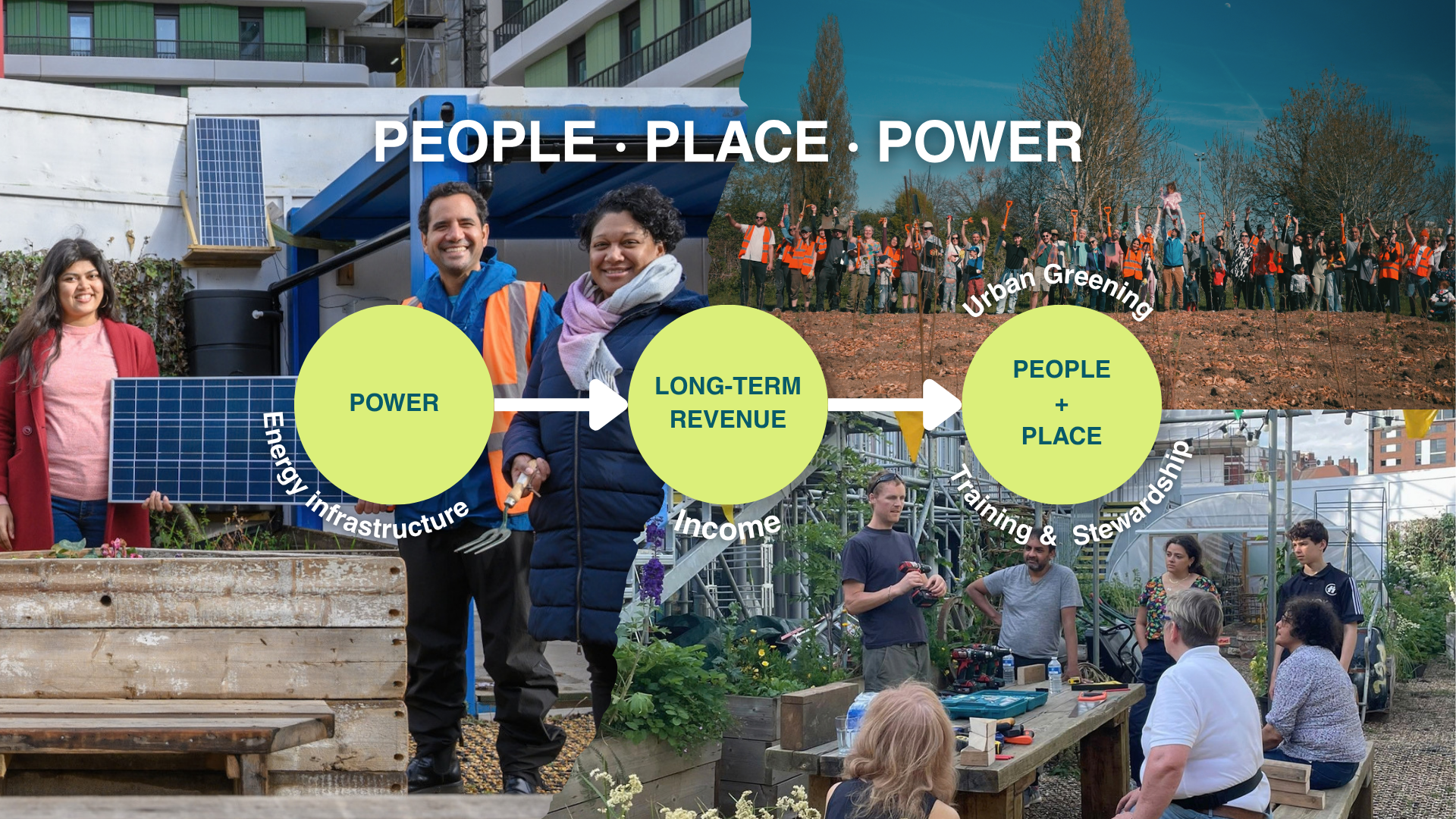
Our approach brings together three interconnected pillars:
People: Education, accredited youth training, employment pathways, community participation and stewardship.
Place: Urban gardens, biodiversity, trees, healthier public spaces and opportunities to reconnect with nature.
Power: Community-owned renewable-energy infrastructure that generates long-term income to sustain the other two pillars.
Together, they create impact.
The technology itself is not the destination. Solar panels, heat networks, batteries and geothermal systems are tools.
What matters is what they make possible for people and places.
The right to nature is part of urban resilience
We believe that access to nature should be understood as a fundamental part of a healthy and resilient city. Not as a luxury, an optional planning benefit or a temporary improvement delivered when funding happens to be available.
Every community should have meaningful opportunities to experience, care for and help shape the natural environment around them. That means more than creating a garden and walking away. It means building relationships with residents, supporting young people to develop skills, involving schools, creating opportunities for stewardship and ensuring that communities have a genuine voice in decisions about their neighbourhoods.
Nature can provide places for learning, food growing, biodiversity, social connection and wellbeing. It also helps cities adapt to heat, flooding and other climate pressures. But for these benefits to endure, communities need more than occasional interventions. They need the resources, relationships and institutions to care for their places over generations.
This is why Energy Garden's financial model matters.
Grants can help something begin. Productive assets can help it endure.
Energy Garden began as a grant-funded initiative. Over time, we developed service contracts and community-owned renewable-energy projects to create a more resilient financial foundation. Today, grants account for approximately 20% of our operating budget, and we expect energy revenue to become our largest income stream next year.
Our long-term ambition is for revenue from productive energy infrastructure to sustain the core costs of our education, biodiversity, horticulture, youth training and community engagement programmes. Rather than continually redesigning activities to fit changing funding priorities, we want communities to have the resources to determine what they need as those needs evolve.
Our Community Benefit Society structure helps protect that purpose through democratic membership, community investment and restrictions on how accumulated assets can be distributed. The goal is to create a financial engine that supports a permanent relationship with communities. Week in, week out. Year in, year out. Decade after decade.
An international conversation interrupted — and renewed
Long before COVID, Energy Garden was attracting interest from cities and organisations looking for new ways to combine climate action with social and environmental resilience.
Our approach was included in resilience strategy discussions in Salvador, Bahia, Brazil, where Energy Garden was considered as a potential platform partner. These conversations reflected a growing recognition that climate resilience is not simply about protecting buildings and infrastructure from extreme weather. It is also about strengthening the capacity of communities to adapt, participate, organise and care for one another.
The pandemic interrupted much of this international collaboration. But it also reinforced the importance of local relationships, accessible green spaces, social infrastructure and communities' ability to respond to unexpected challenges. Today, as cities face increasing climate risks and pressure on public resources, these questions are returning with greater urgency.
Our recent engagements with practitioners and partners in Washington DC, Baltimore, New York and Stockholm have been an opportunity to reconnect with a wider international community exploring how to create lasting, locally rooted solutions. We are finding that, despite differences in geography, institutions and energy markets, many of the underlying questions are remarkably similar.
How do we give communities greater agency?
How do we create financial structures that support long-term environmental stewardship?
And how do we ensure that the infrastructure we build today continues to benefit future generations?
Stockholm: building on the experience of others
At Innovation Day in Stockholm on 1 October, Energy Garden joined municipalities, investors, businesses, researchers and innovators exploring how established solutions can be adopted and scaled.
Our presentation focused on a simple proposition:
Build climate infrastructure that creates intergenerational community wealth, not just clean energy.
Following the event, we met with representatives from Järfälla Municipality, White Arkitekter, ElectriCITY Innovation and Fundforward to explore what a Swedish version of Energy Garden might become. The conversations considered potential sites, community participation, investment, ownership and the role of different energy technologies.
The response was encouraging, and discussions are continuing around how a first project might be developed and financed. The ambition is not to reproduce London's model unchanged.
Sweden has different institutions, energy markets, cooperative traditions and community needs. The opportunity is to work with local partners to understand how the principles of community ownership, productive infrastructure and long-term environmental stewardship could be adapted. What matters is finding the right people, places and partnerships to make the approach work.
Giving community and nature a seat at the table
One of the central messages of our Stockholm interview was that the next generation of climate infrastructure must be designed differently. Governments, investors, developers and businesses all have important roles to play. But communities and nature must also be represented from the beginning.
Community deserves a seat at the table. Nature deserves a seat at the table. This is not simply about consultation. It is about designing governance and ownership structures that protect the interests of people and the environment over time. A community-owned energy asset can generate revenue for decades. The question is whether that revenue leaves the neighbourhood or helps finance its future.
By creating protected structures for community ownership and reinvestment, we can begin to change how wealth flows through our cities. We can support education, employment, biodiversity, accessible green spaces and community stewardship through productive assets rather than relying entirely on temporary funding. This is the deeper ambition behind Energy Garden.
Building resilience for generations
The growing international interest in Energy Garden reflects something important. Cities are not simply looking for another renewable-energy technology or another environmental pilot. They are looking for ways to connect climate action with social resilience, long-term financing and meaningful community participation.
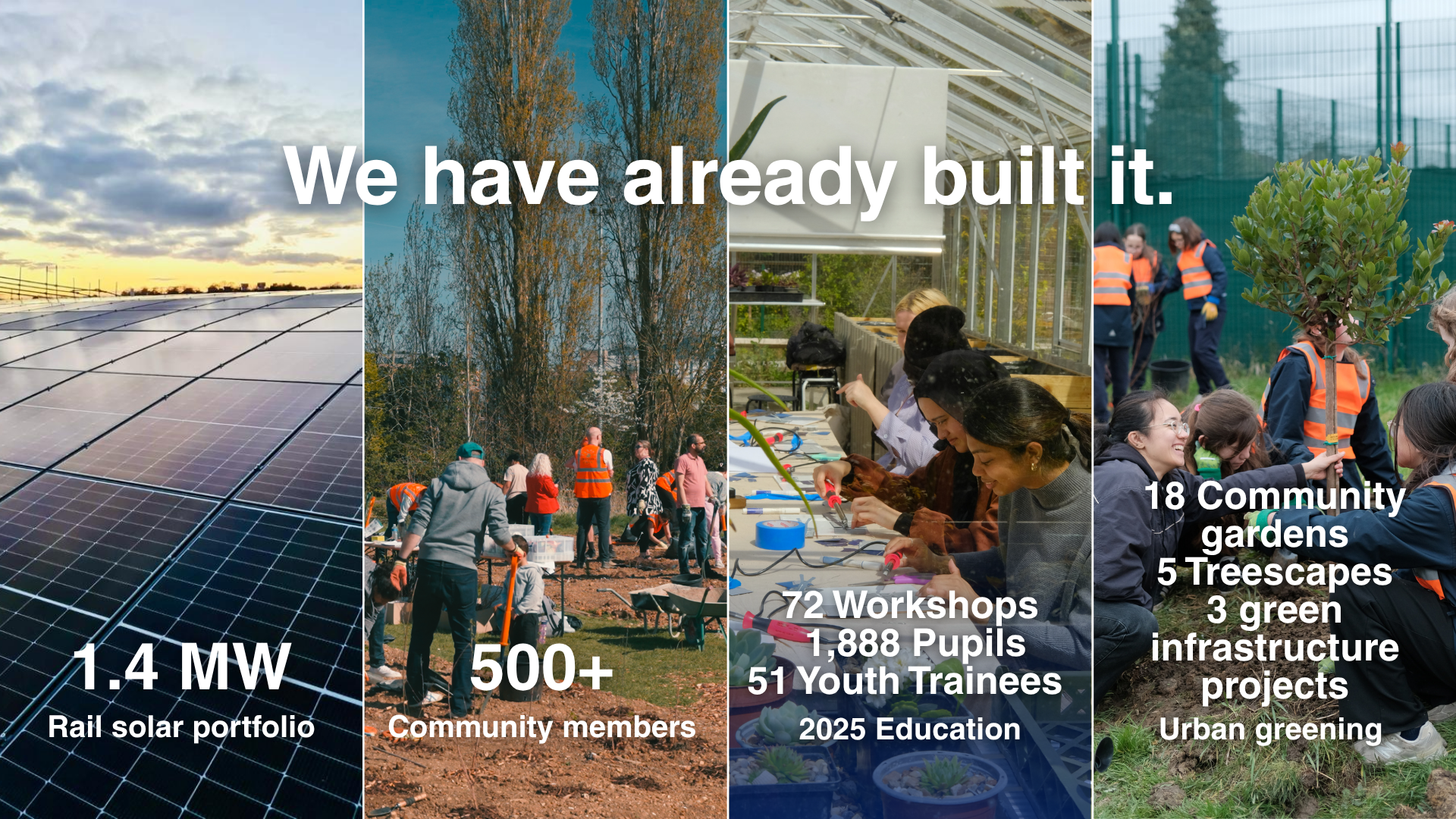
Our experience in London offers one possible approach, developed through years of collaboration with residents, public institutions, businesses and investors. Now, through a growing global community of practitioners, we have the opportunity to learn from others, adapt what works and explore what comes next. Because the ultimate measure of successful climate infrastructure should not simply be how much energy it produces or how much carbon it saves. It should also be whether it strengthens the communities around it, protects the natural world and leaves future generations with greater opportunity and agency.
The energy transition must start with people. And the wealth it creates should help sustain both people and nature for generations.
Read Agamemnon's interview with ElectriCITY Innovation: Green Energy and Community Power