
Exploring London’s Future Biome Through Climate-Resilient Planting at Church Path
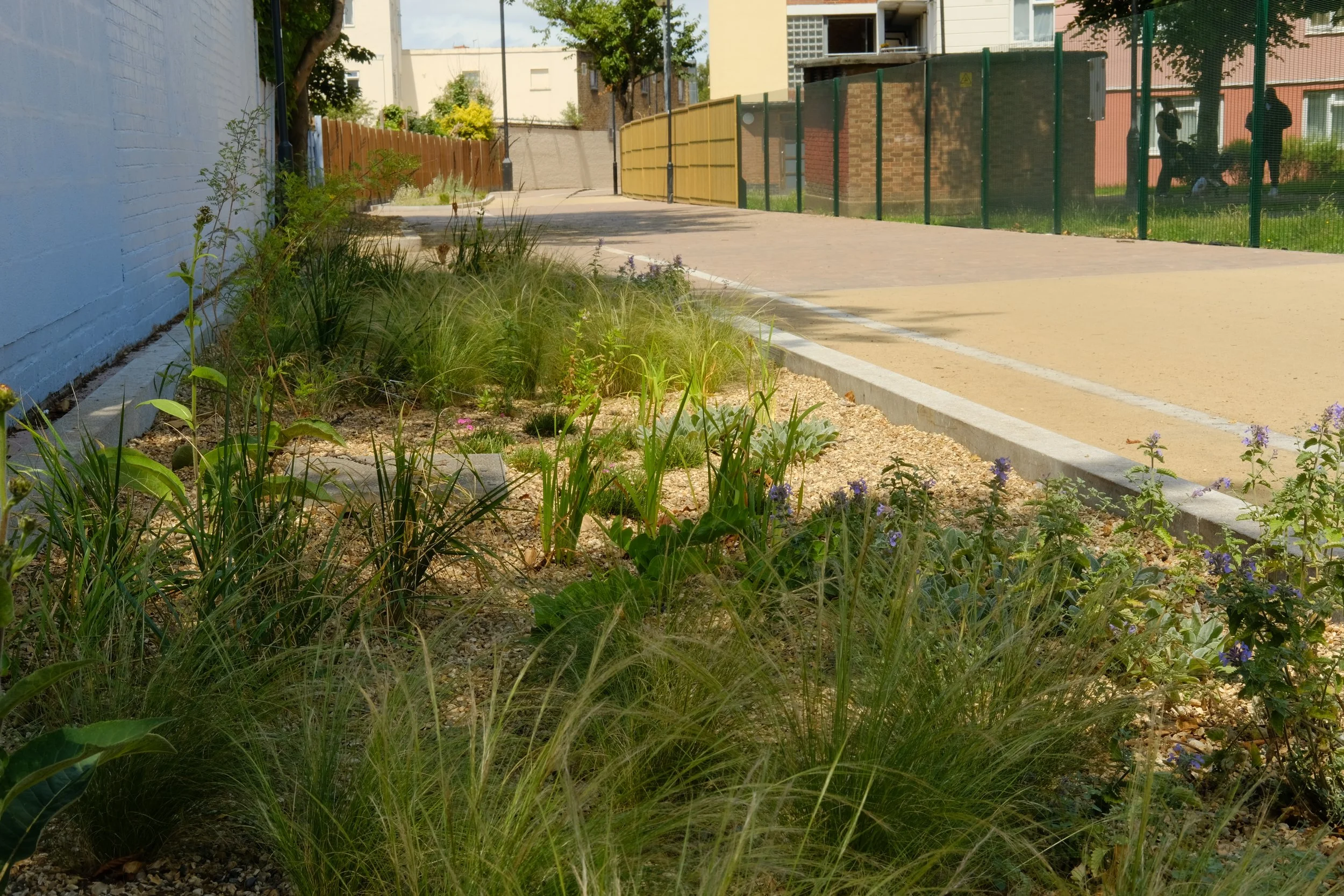
Church Path is part of Energy Garden’s wider green infrastructure work with Brent Council, where we are helping create greener, more climate-resilient neighbourhoods alongside the people who live, learn and spend time there.
Alongside the physical planting and rain garden works, Energy Garden’s approach places equal importance on local participation and education. Residents, schools, and young people are invited to shape projects before work begins, take part in planting and learning during delivery, and remain involved through stewardship and aftercare. This combination of technical green infrastructure, community engagement and practical environmental education is central to the Energy Garden model.


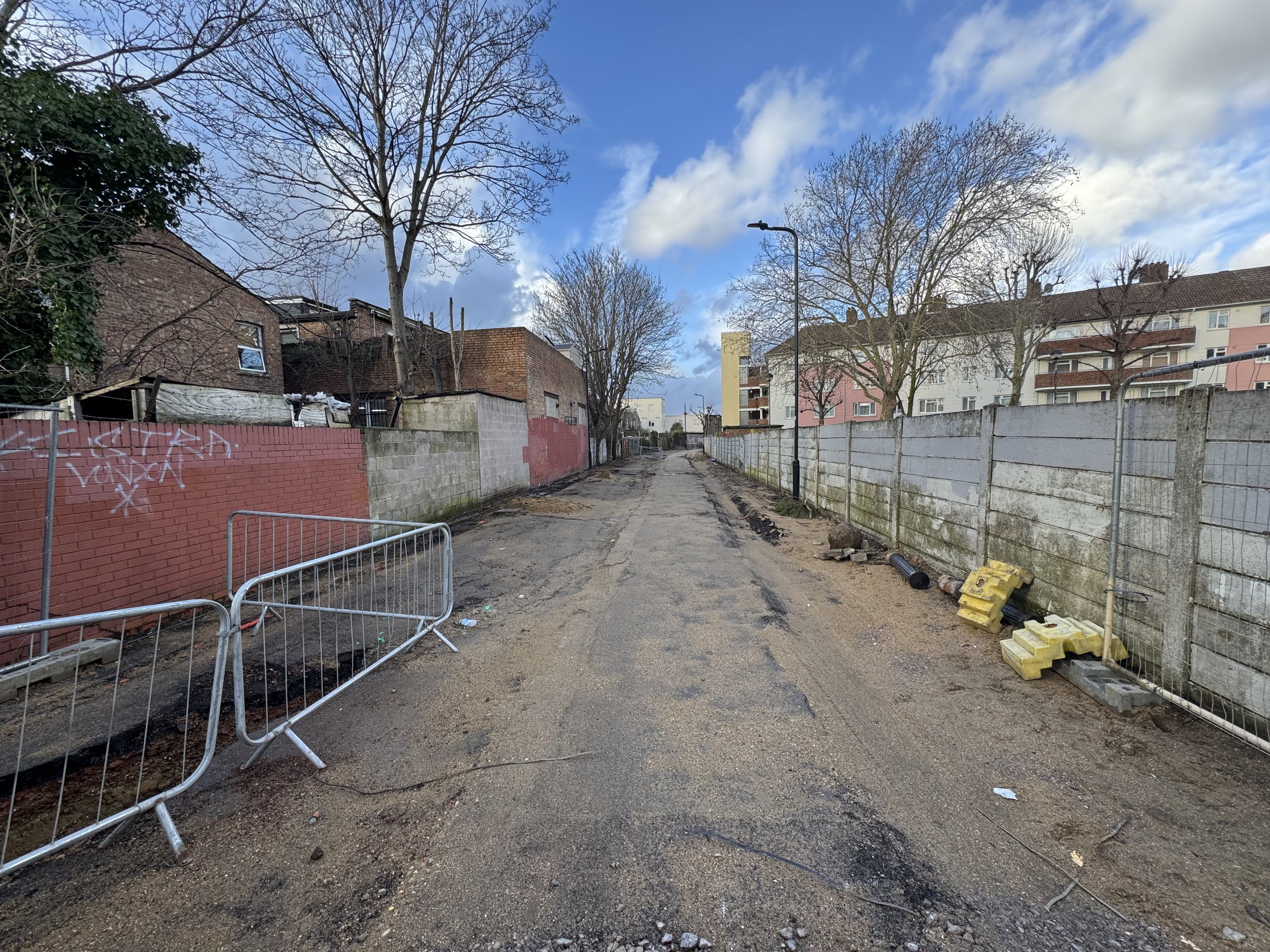
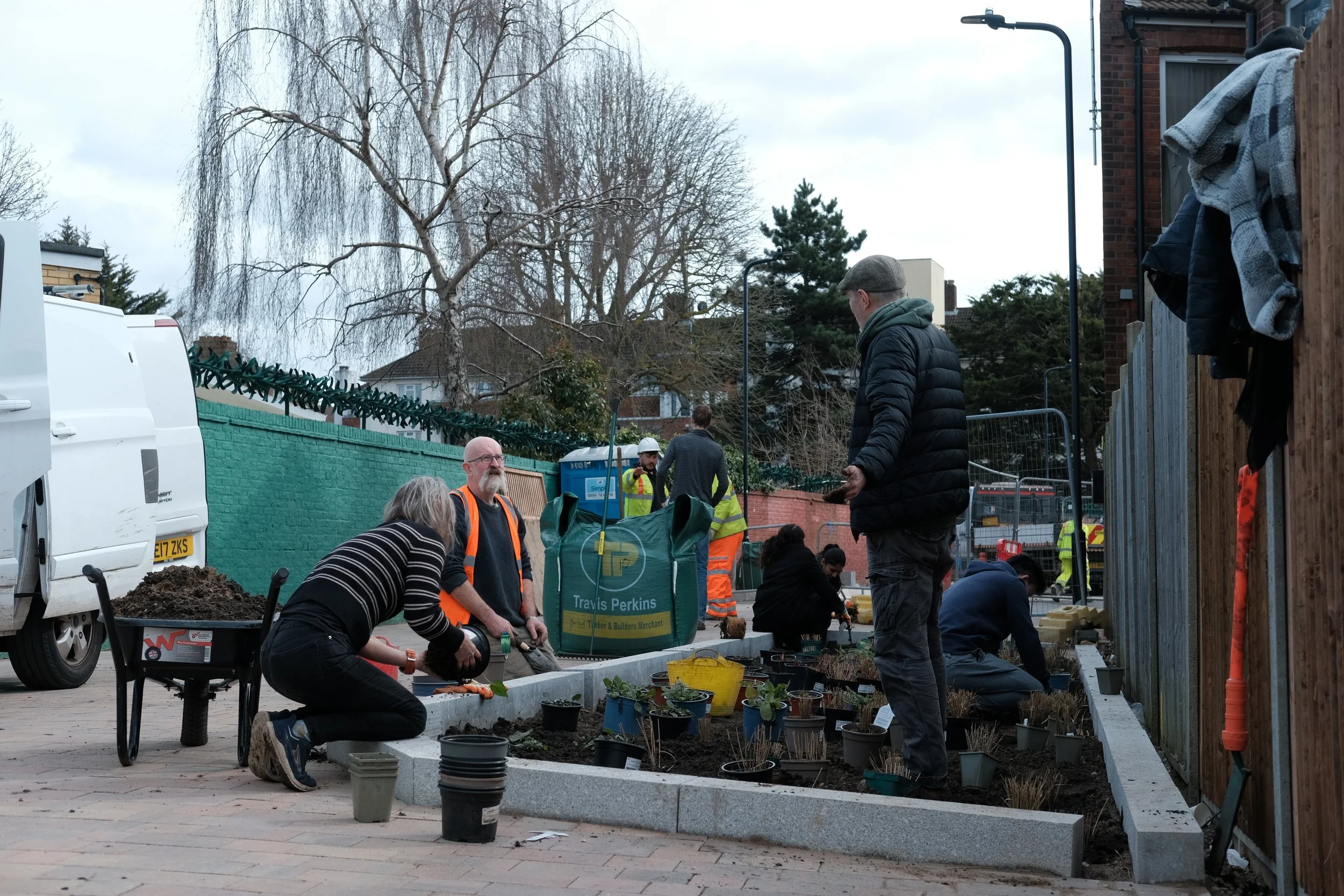
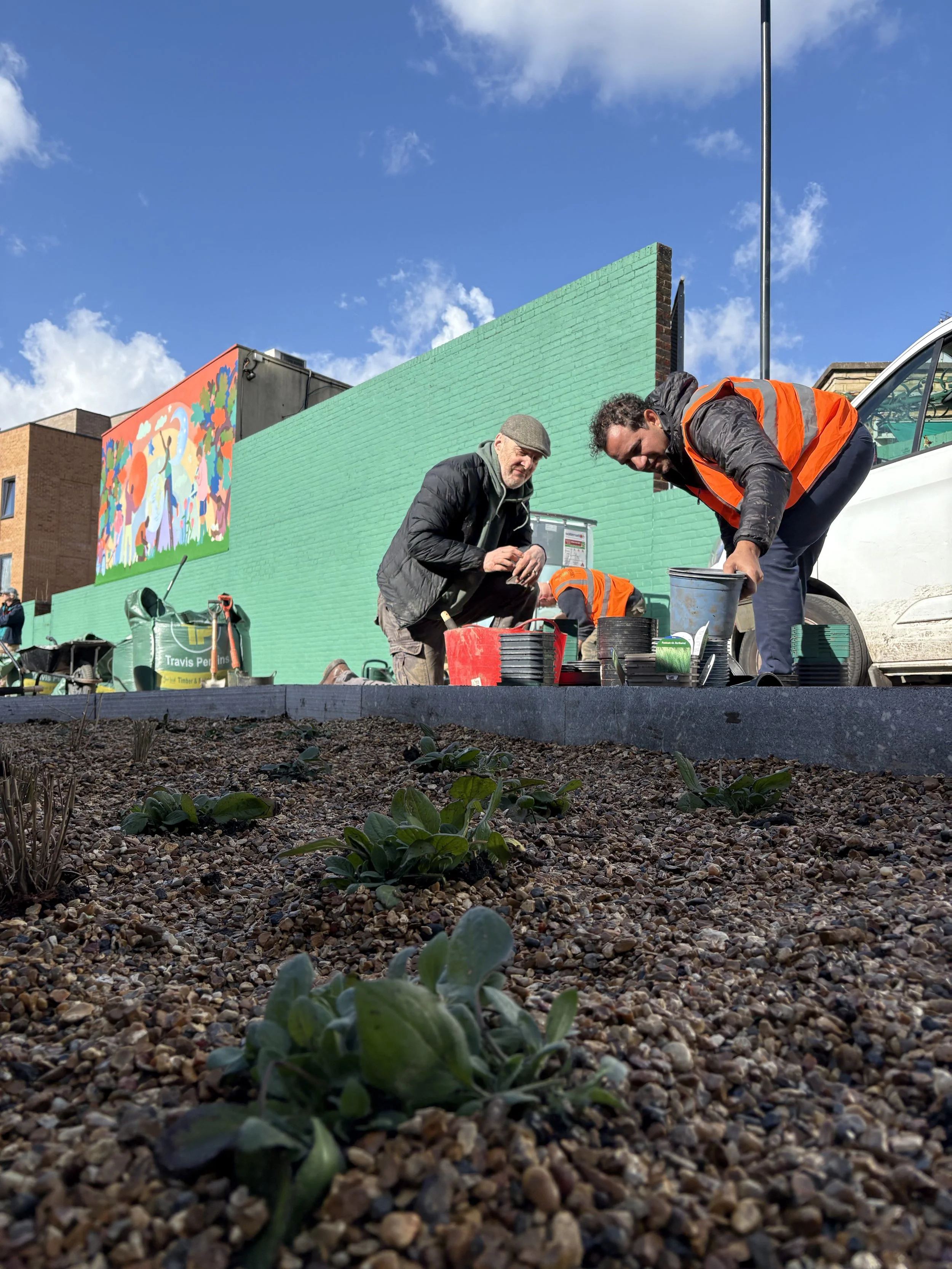
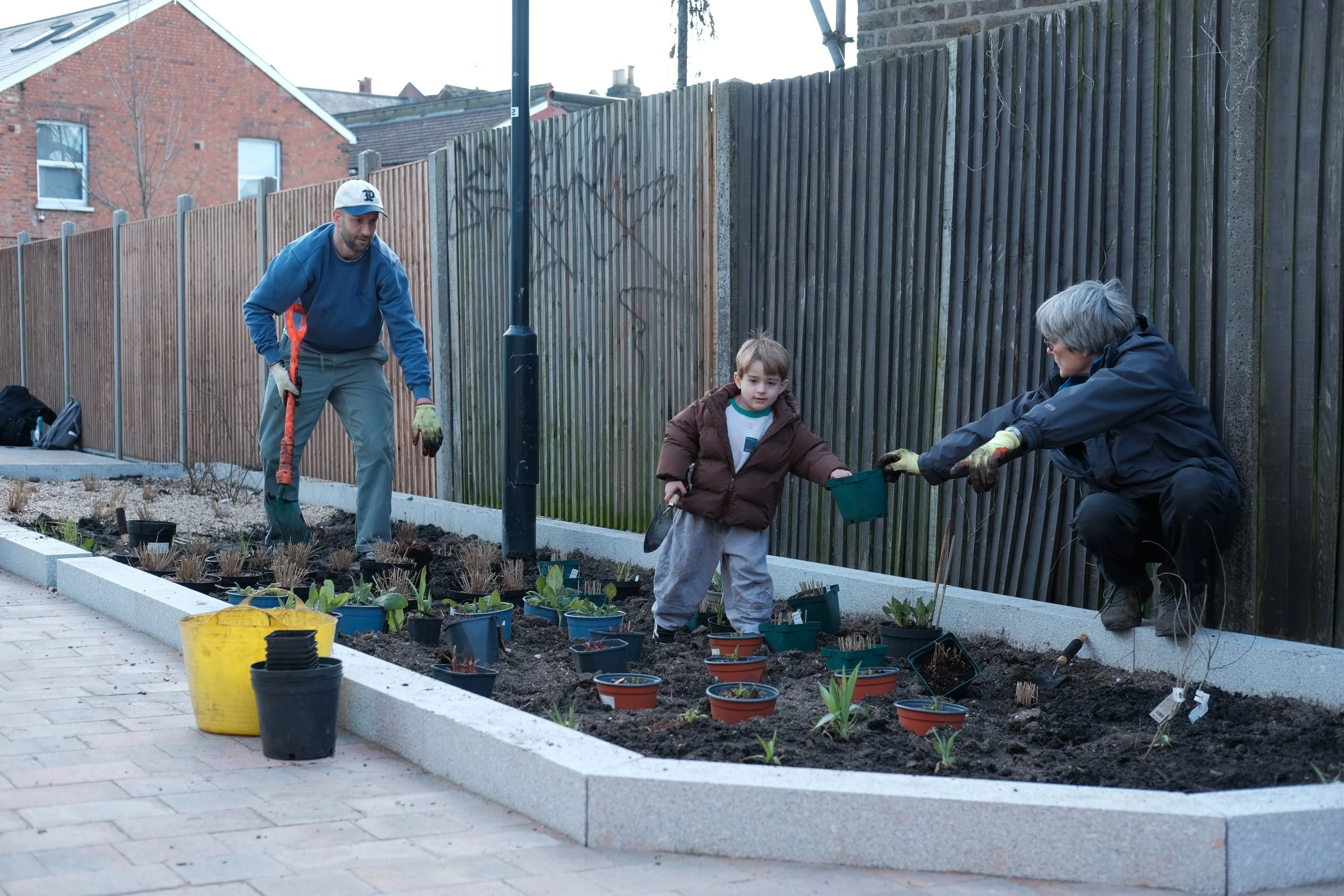
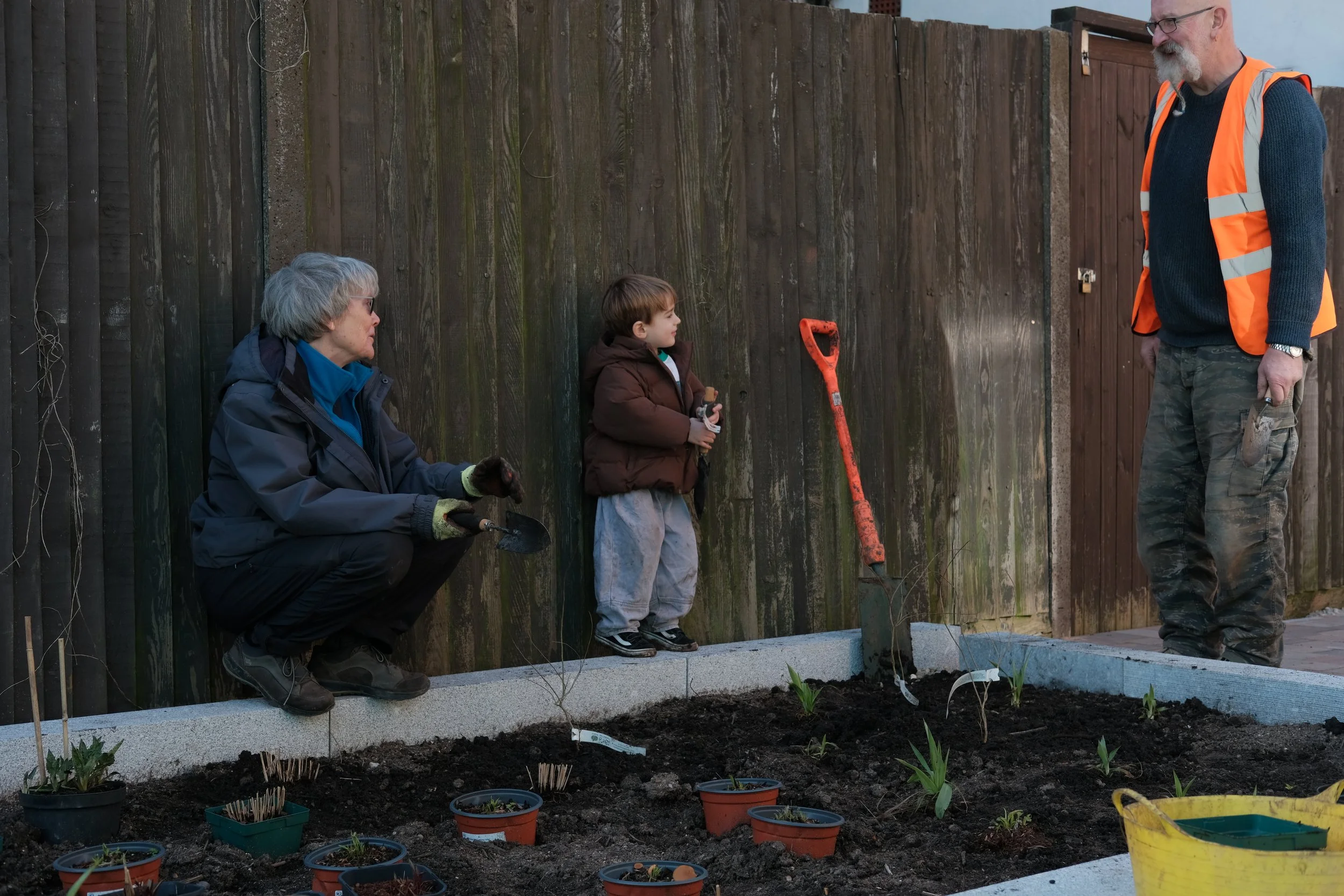
Following a drop-in design consultation with local residents in January, we organised planting days in early spring, inviting residents, pupils from nearby schools and some of our Youth Training Programme trainees to help bring the plans to life. One of the sessions fell on a particularly windy day in March, but we were really pleased to see such a strong turnout. Pupils, residents, trainees, and Energy Garden team braved the weather, got stuck in and brought plenty of energy and enthusiasm to the day.
It was a lovely example of the kind of involvement we want to build into projects like this from the start, not just asking people what they would like to see, but creating opportunities for people of different ages and backgrounds to learn together and take an active role in shaping and caring for the space.
The next part of the story is how the planting will perform over time. The rain gardens at Church Path are designed to help manage rainfall and support biodiversity, while also testing how different planting approaches respond to London’s changing climate. To do this, the planting is organised into four main palettes – American Prairies, Mediterranean Basin, Caucasus Mountains and Central Asian Foothills – each drawing on species adapted to challenging conditions and chosen to provide food and habitat for pollinators and birds.
Although geographically diverse, what the different plant palettes have in common is that they come from regions around the world that experience frequent drought, heat, and sporadic flooding; all of which London is likely to experience more of in the years to come.
While each planting block is distinct, all share the same core attributes:
Tolerance to both dry and wet conditions
Tolerance to heat and cold
High biodiversity value
Low maintenance once established
Plants available from UK based nurseries
Well suited to spatial constraints of rain gardens
American Prairies
North America's grasslands are in the middle of the continent where there is insufficient rain to support forests but too much to be a desert. Deep rooted grasses and vibrant perennials thrive under the same climatic shifts London is beginning to experience – hotter summers, heavier rain, and unpredictable seasons.
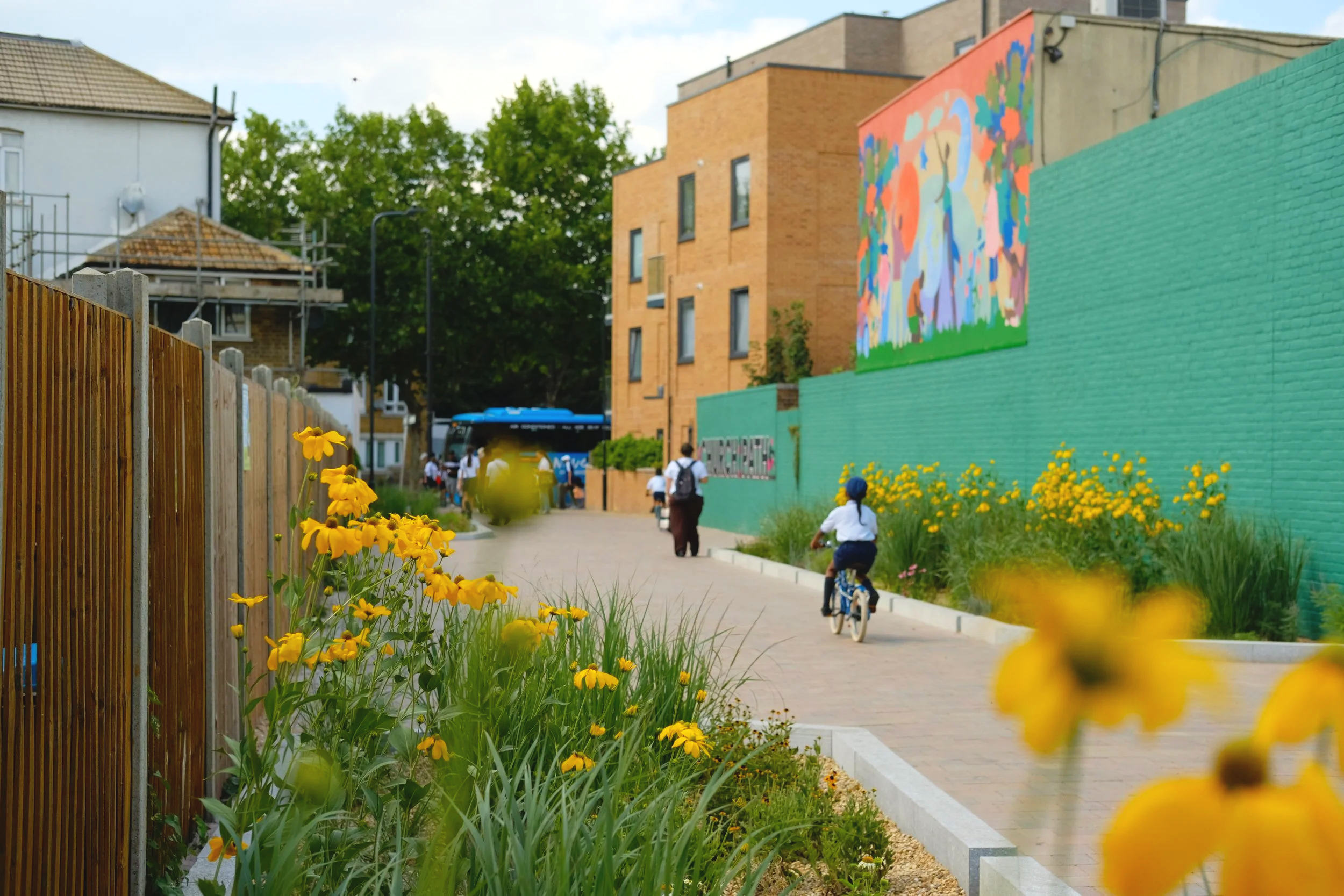
1. Cutleaved coneflower (Rudbeckia laciniata) in bloom. Photo: Selvia Diwanty
On Church Path, layered grasses and flowering perennials recreate the structure of the prairies, providing insects and wildlife with shelter, nesting habitat, and food through the seasons. This palette begins on Church Road and ends on the South side of Brownlow.
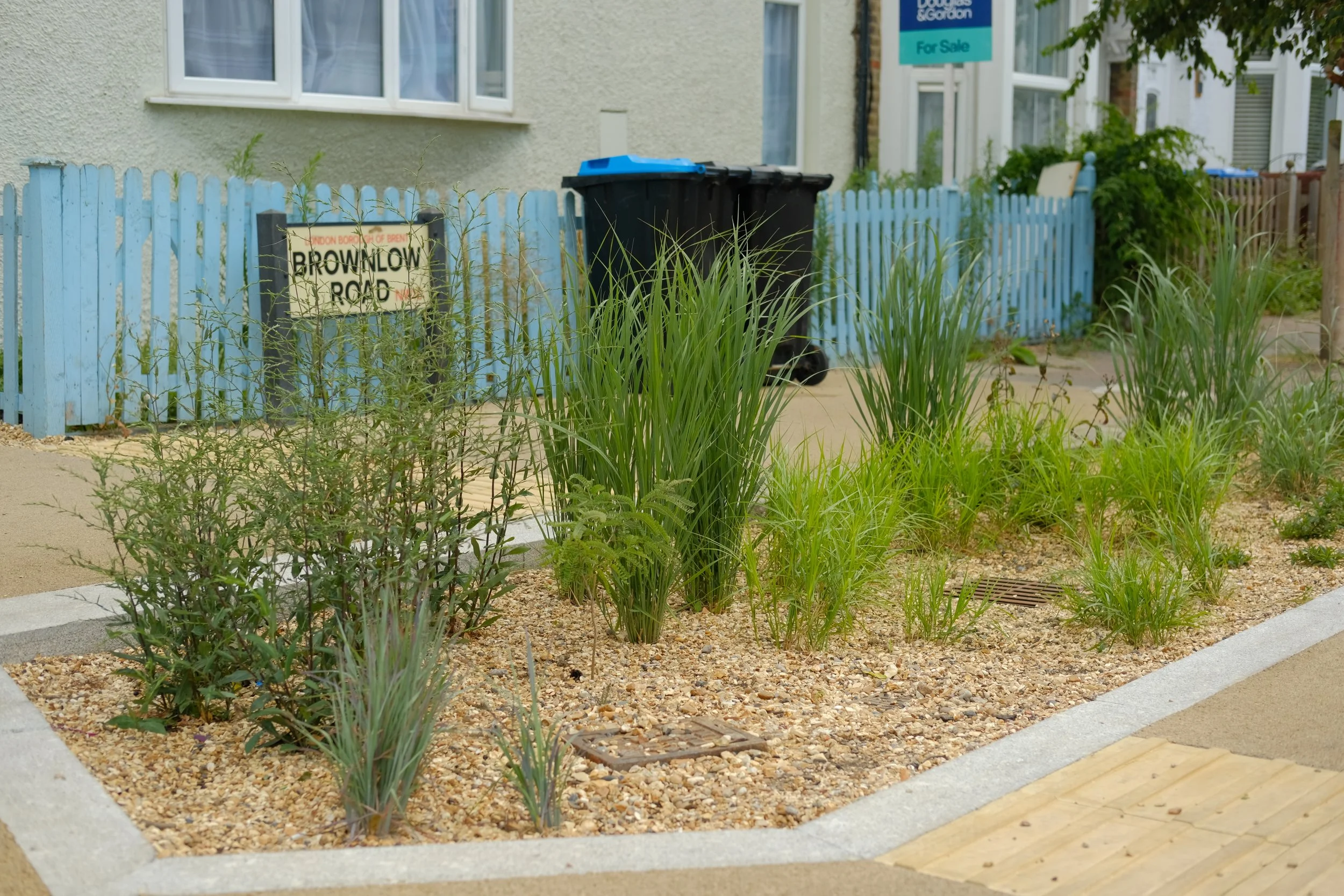
2. Little bluestem (front), smooth asters (back left), switch grass (back middle), lead plant (middle), palm sedge (around drain). Photo: Selvia Diwanty
Grass species found in the prairies section of Church Path include grasses Little bluestem (Schizachyrium scoparium), Switch grass (Panicum virgatum), Indian steel (Sorghastrum nutans), and Prairie dropseed (Sporobolus heterolepis). Staple flowering perennials include a diversity of coneflowers (Rudbeckia laciniata, Rudbeckia fulgida deamii, Echinacea purpurea), Cup plants (Silphium perfoliatum), bergamot (Monarda didyma), and smooth asters (Symphyotrichum laeve). Shrub species include lead plants (Amorpha canescens), and virginia sweet spire (Itea virginica).
American prairie plants are naturally drought tolerant as they evolved in an environment with hot summers, infrequent rainfall, strong winds, and seasonal fires. Plants from this typically have deep root systems, allowing them to access water well below the soil’s surface.
As the planting matures and the roots establish, the planting should become increasingly self-sustaining, with dense vegetation that suppresses weeds, improves water infiltration, and creates a more stable habitat for pollinators and wildlife.
Mediterranean Basin
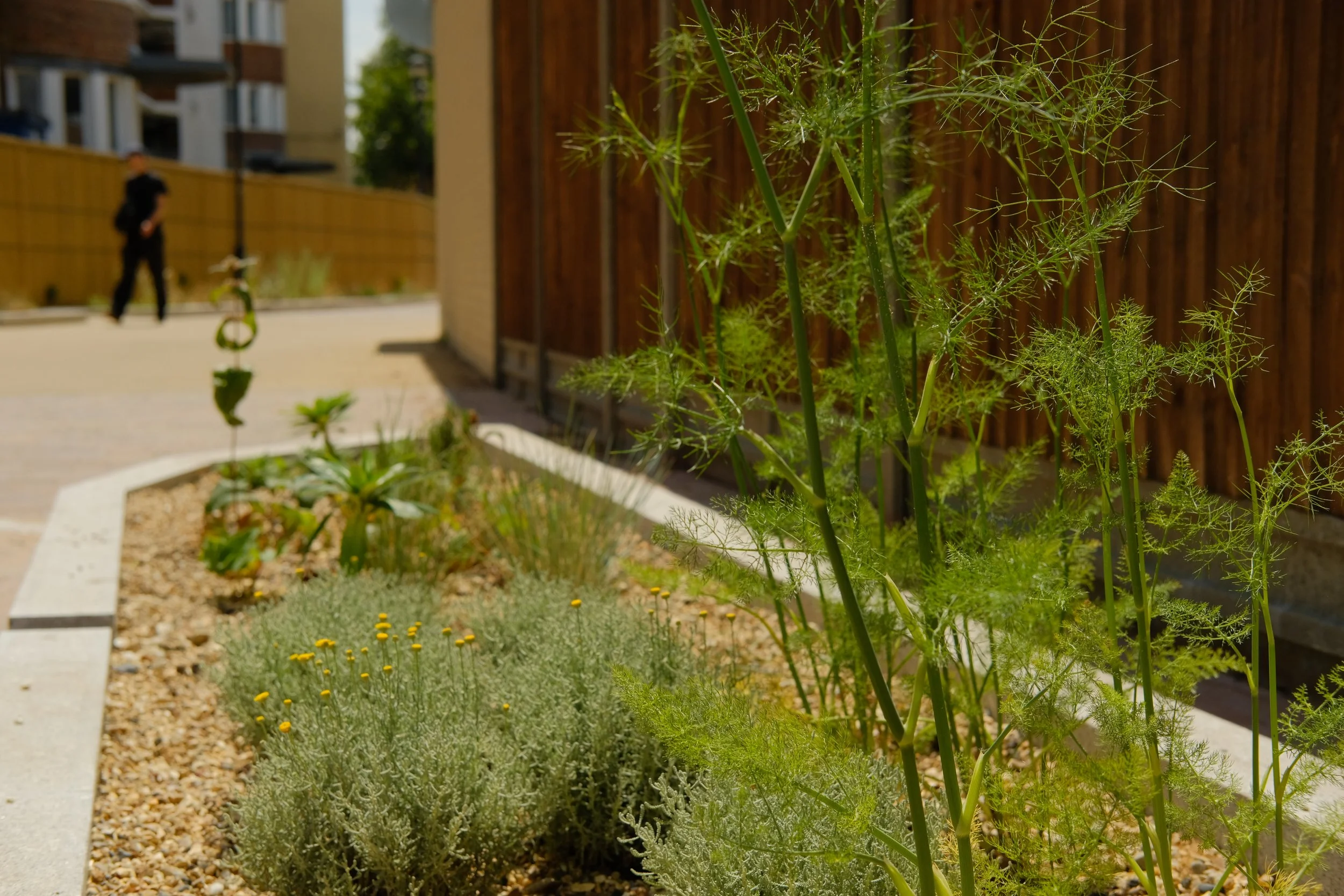
3. Cotton-lavender (left), green fennel (right). Photo: Selvia Diwanty
The mediterranean region experiences long, dry summers and increasing demands on water resources, which effectively results in a shrunken supply of groundwater and a rise in saltwater intrusion. Species that are native to this region are able to withstand these conditions through their often small, waxy or silvery leaves, extensive root systems and seasonal growth characteristics that allow them to thrive with minimal rainfall.
Mediterranean style planting is beneficial to pollinators as many species are rich in nectar and flower over long periods.
On Church Path the palette is located begins South of Brownlow Rd and ends between Beveridge and Leopold roads. Planting consists of flowering perennials, grasses, and select shrubs that are well suited to the raingarden context. Grasses include blue oat grass (Helictotrichon sempervirens), golden oats (Stipa gigantea), blue fescue (Festuca glauca). Some of the perennials found throughout include Jerusalem sage (Phlomoides tuberosa 'Amazone'), artemesia (Absinthium), rose of Sharon (Hypericum calcynium), lavender-cotton (Santolina chamaecyparissus). Shrubs include azores spurge (Euphorbia stygiana) and rosemary (Salvia rosmarinus).
Over time, the evergreen structure, aromatic herbs, and layered grasses will develop extensive root systems, conserve water, and support biodiversity through prolonged periods of draught and heavy rain.
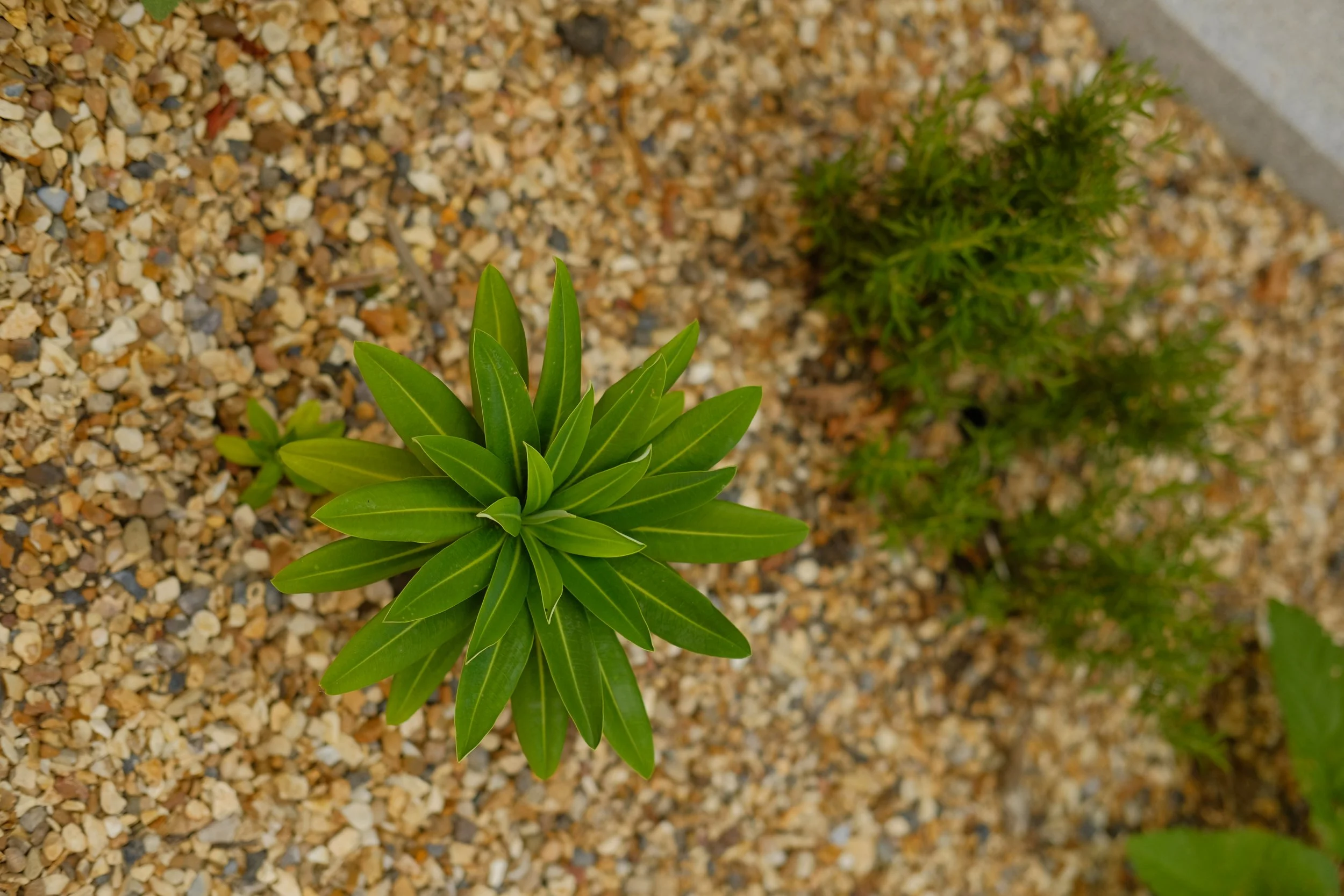
4. Azores spurge (left), rosemary (right). Photo: Selvia Diwanty
Caucasus Mountains
Situated in between the Black and Caspian Seas, comprising parts of Southern Russia, Georgia, Armenia, and Azerbaijan. The region is home to a variety of microclimates with an emphasis on shade, shelter, and biodiversity. This plant palette demonstrates how London landscapes can remain lush and abundant in the face of unpredictable weather.
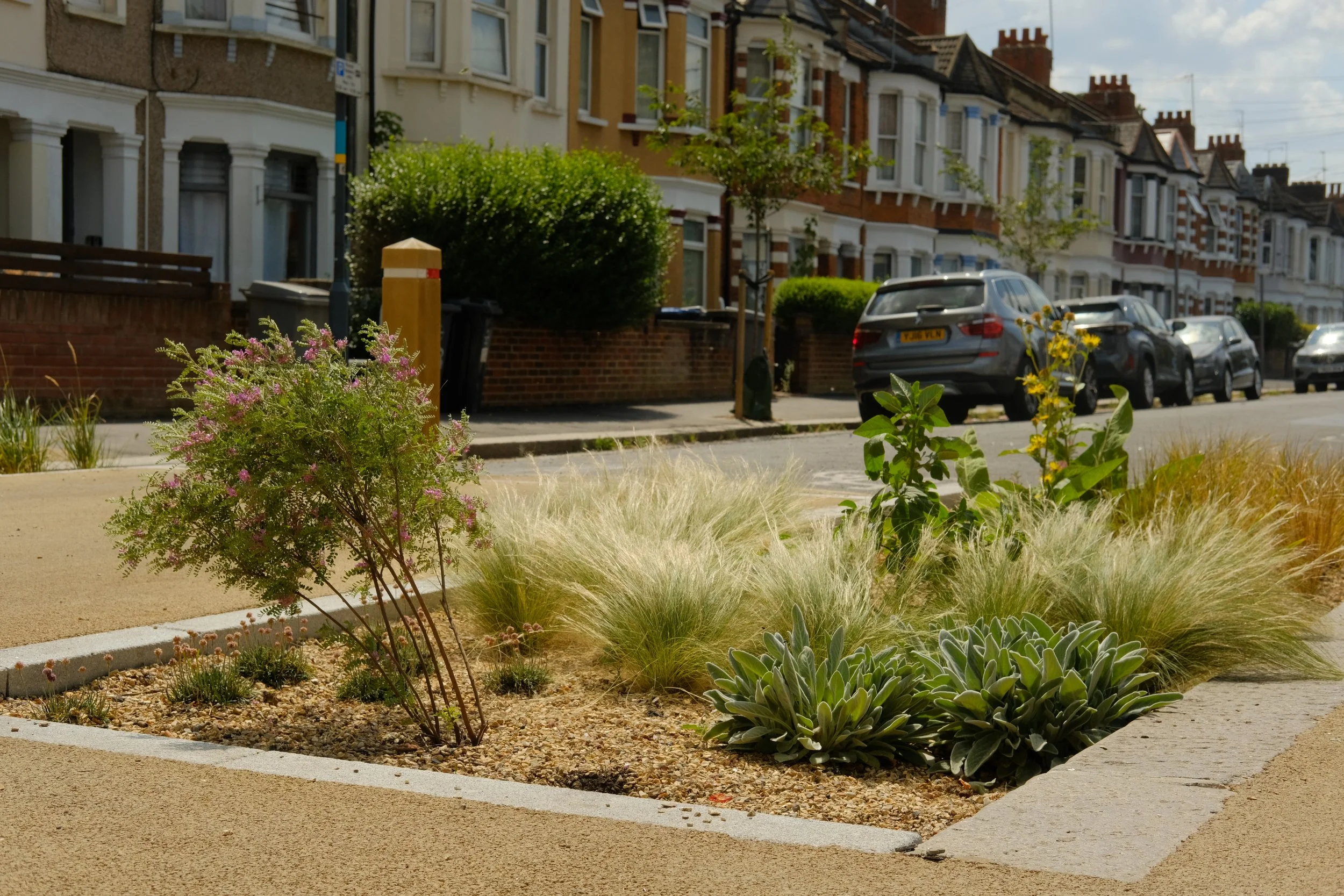
5. Himalayan indigo shrub (left), needle grass (middle), lamb's ear (front right). Photo: Selvia Diwanty
On Church Path, this palette begins North of Leopold Road and ends on Redfern Road. The plants chosen are inspired by the Caucasian meadows, with layered grasses, shrubs and flowering perennials in this palette provide a rich succession of blooms, shelter and seed for pollinators, birds and other urban wildlife.
Grasses found in this palette on Church Path include reed grass (Calamagrostis arundinacea), and feather grass (Stipa pennata). Perennials include lamb’s ear (Stachys byzantina), star of persia (Allium christophii), and milky bellflower (Astrantia lactiflora).
The plants in this palette have built resilience through exposure to extreme mountain environments, where wet springs, hot/dry summers, cold winters, thin soils, and rapid drainage are the norm.
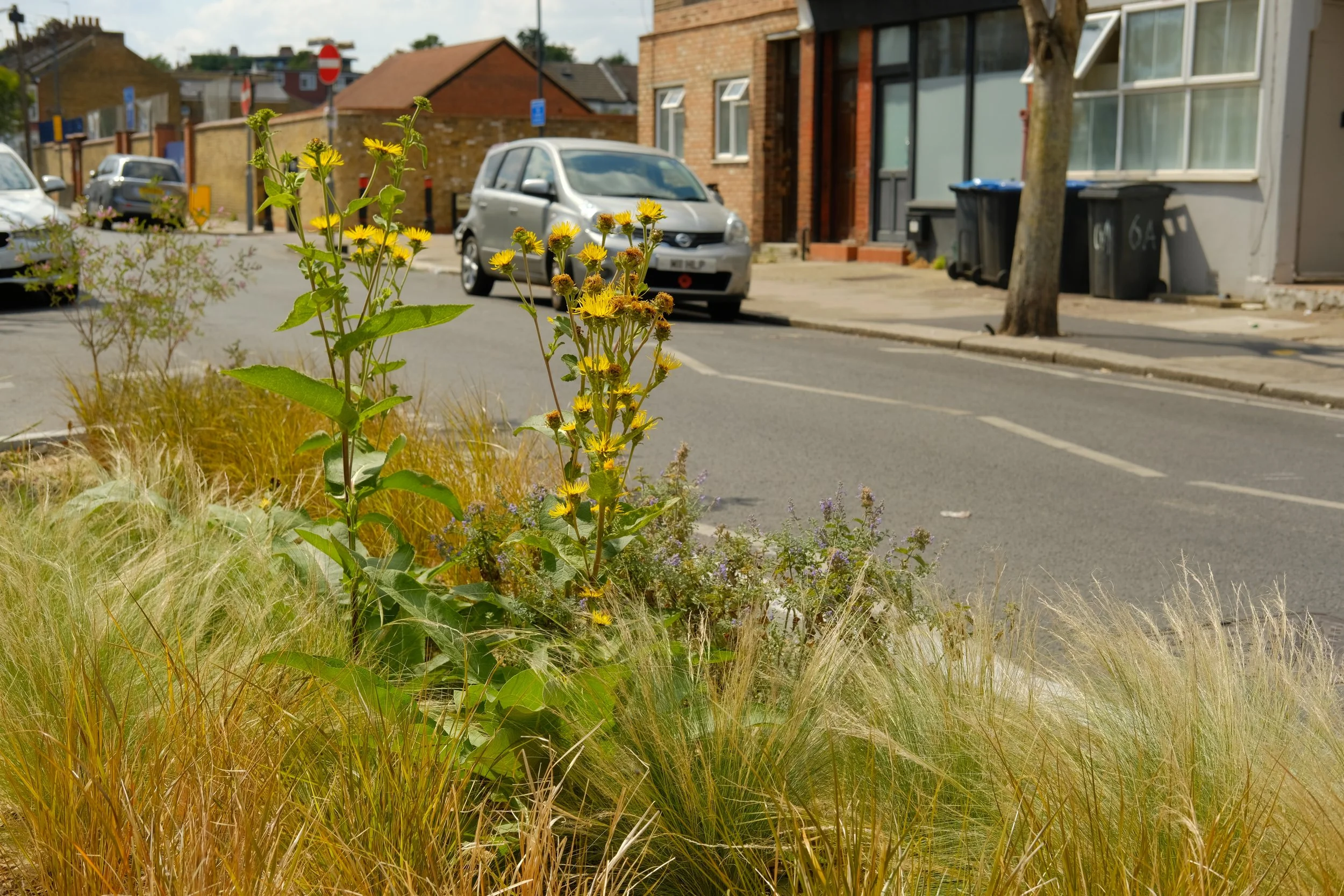
6. Giant fleabane (yellow flowers), reed grass (front). Photo: Selvia Diwanty
As the planting matures, the structure will evolve and grow in complexity, creating dense layers of vegetation that slow rainfall, protect soils, and support a range of wildlife.
Central Asian Foothills
The Central Asian Foothills is an ecoregion which stretches through Kyrgyzstan, Tajikistan, Uzbekistan, Turkmenistan, Kazakhstan, and consists of steppe grasslands, savannas and shrublands. Plants in this region have evolved to survive prolonged drought, intense sunlight, and poor, free draining soil.
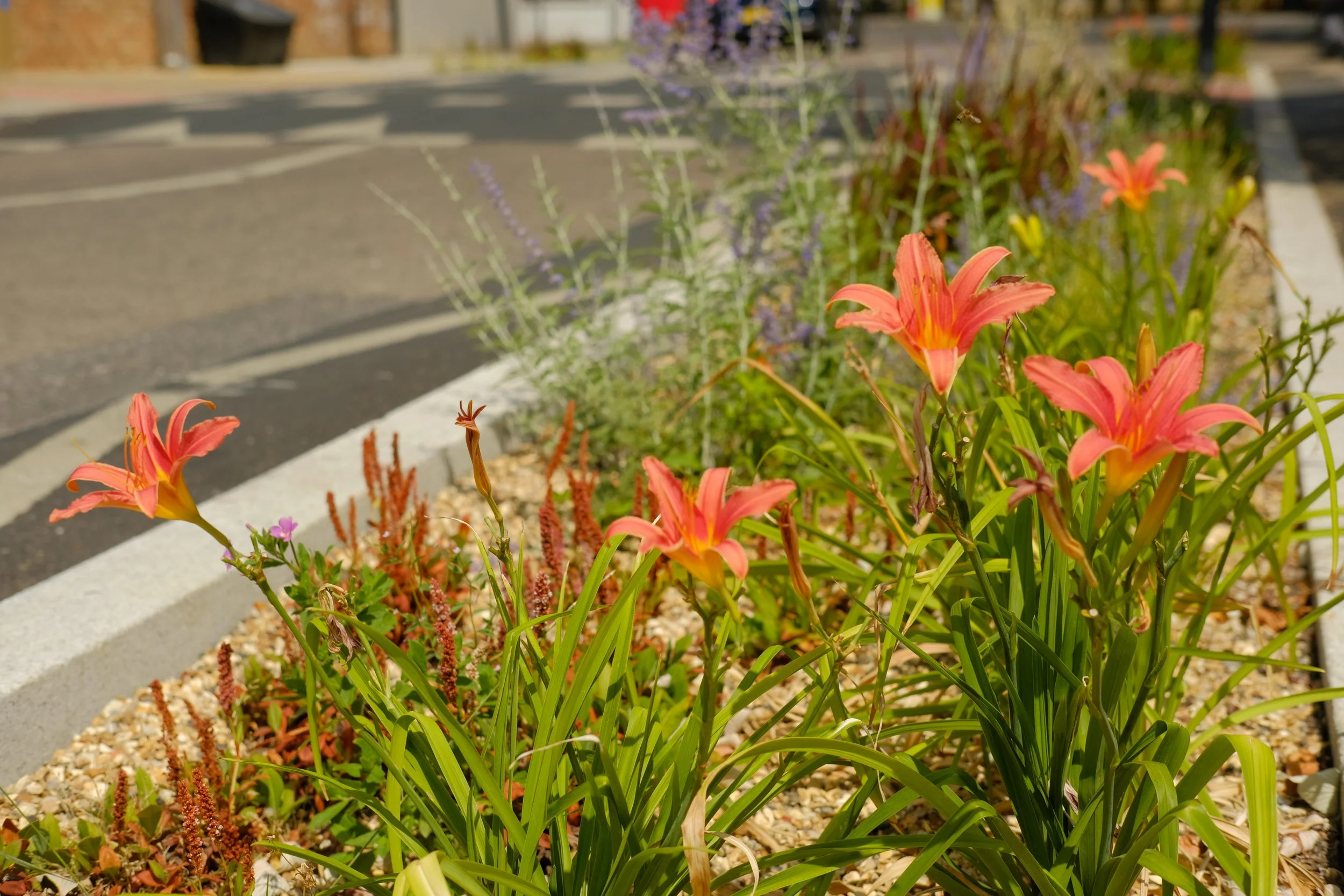
7. Bistorta (left), daylillies (right). Photo: Selvia Diwanty
On Church Path, the palette is concentrated around the Fortunegate Rd intersection. At this stage, the planting consists of flowering perennials and layered grasses that provide a succession of nectar-rich flowers, seeds, and shelter that support birds and pollinators. Grass species include cogon grass (Imperata cylindrica) and autumn moore grass (Sesleria autumnalis). Some of the flowering perennials include heart-leaved bergenia (Bergenia cordifolia), Himalayan bistorta (Bistorta affinis), daylillies (Hemorocallis), and rose campions (Silene coronaria).
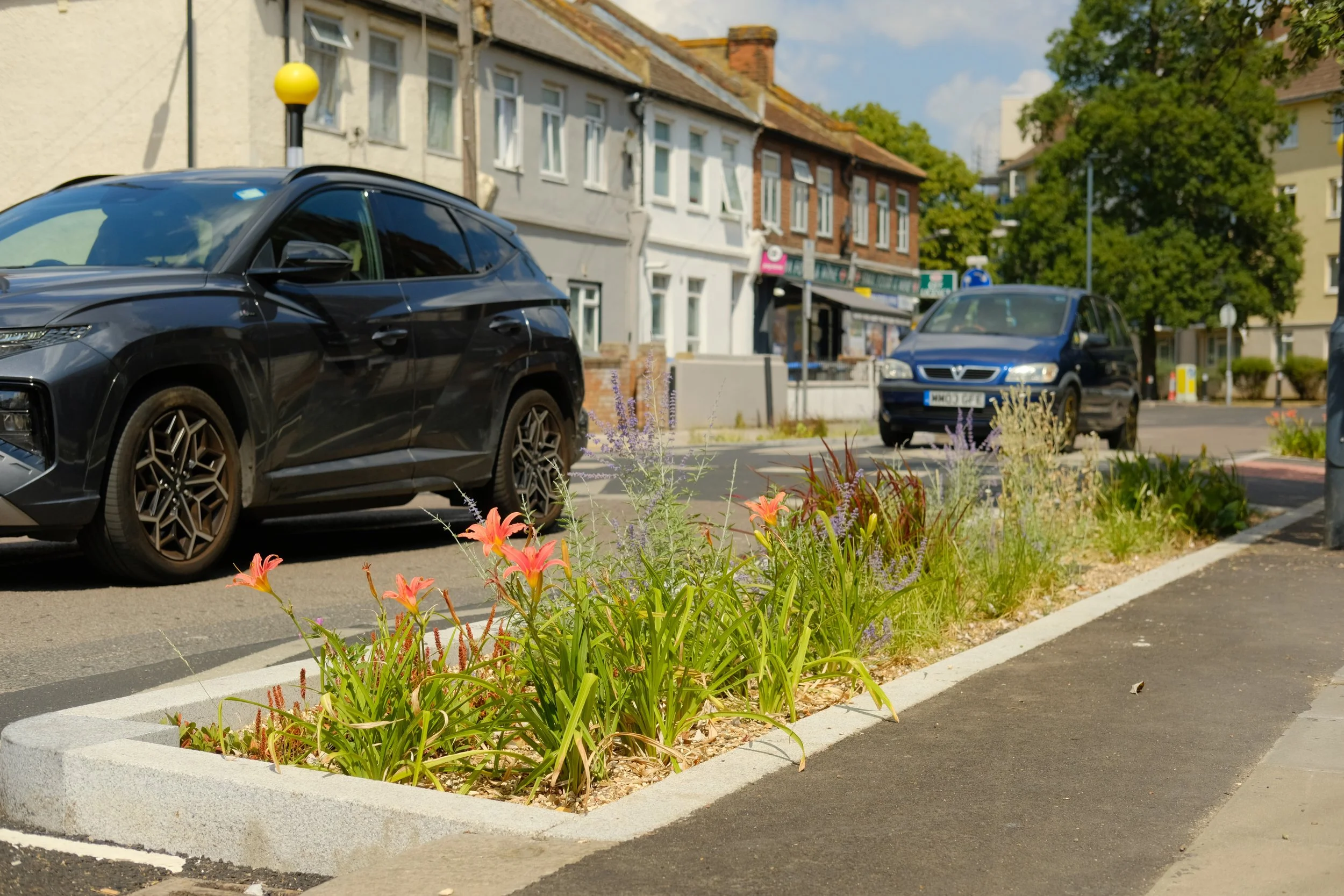
8. Daylillies (front). Photo: Selvia Diwanty
As this palette establishes, deeply rooted grasses and resilient perennials will learn to capture sporadic rainfall and flourish despite periods of heat, drought and cold.
Energy Garden works with councils, schools, communities and partners to design and deliver green infrastructure programmes that combine climate resilience, biodiversity, practical education and long-term community stewardship. To discuss bringing this approach to your area, contact silas@energygarden.org.uk.